01 — Source
We buy at origin, or we don't buy.
Almost every material in the house is bought from someone we have met. Saffron in
October, in Kashmir, from a co-operative whose threads we have been grading for eleven
years. Bergamot from a single Calabrian grove. Oud through one dealer in Vientiane who
will still refuse us a lot if he thinks the resin is young. It is slower, it is more
expensive, and it is the only way we know to be sure of what is in the bottle.
02 — Distil
Low, slow, and never twice the same.
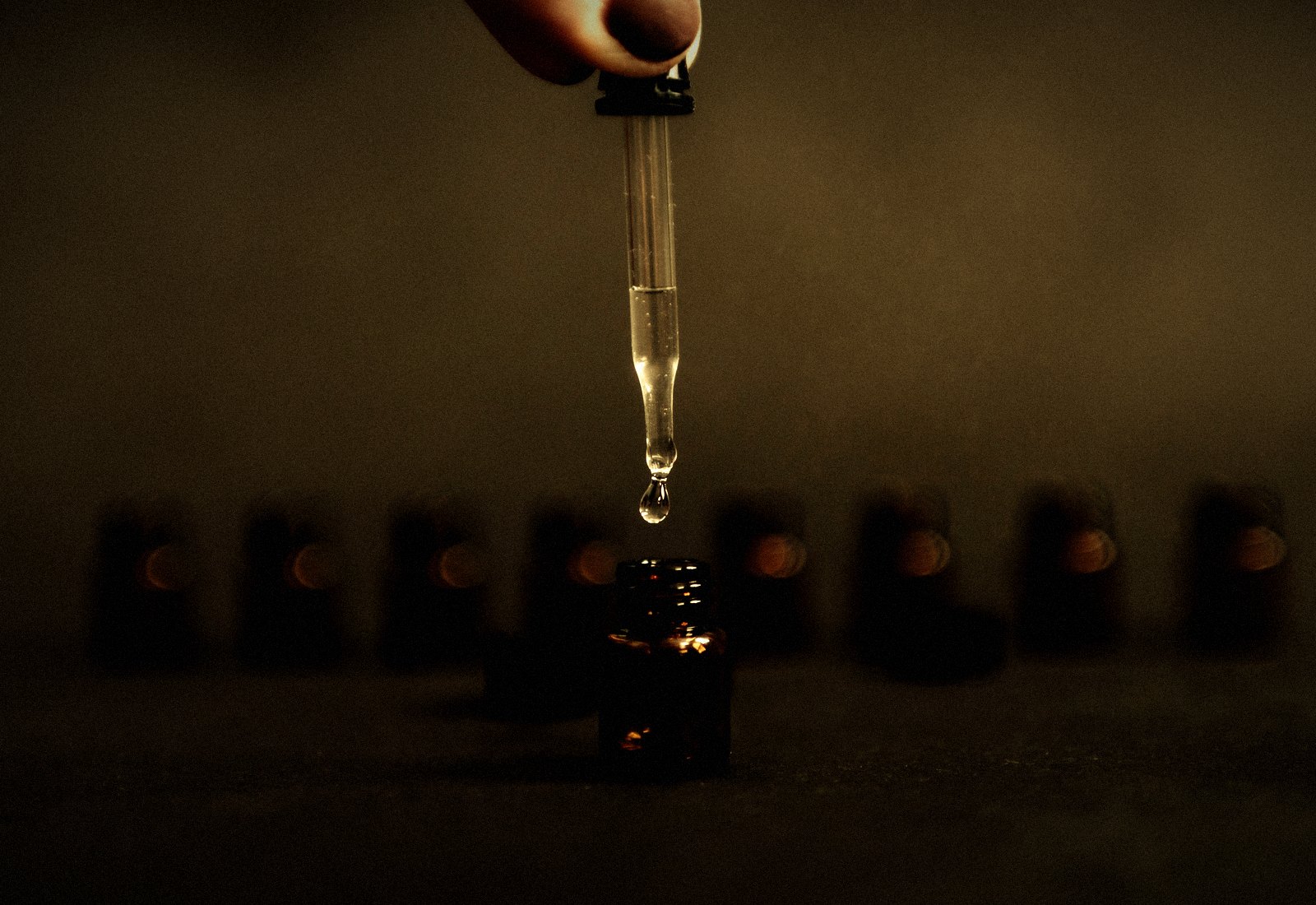
Heat is the enemy of a delicate top note. Our stills run cooler and longer than is
commercially sensible — a bergamot run takes most of a day for a yield that a larger
house would consider a rounding error. Each batch is logged, numbered and nosed against
the previous one. When a distillation is not right, it does not go into anything.
03 — Blend
By hand, against a written formula.
Ten litres at a time, on a balance accurate to a hundredth of a gram. The formula is
written down, but the materials move — this year's rose is not last year's rose — so
every batch is adjusted by nose before it is signed off. Two people have to agree
before a batch is accepted.
04 — Rest
Six weeks in the dark.
Maceration is the least glamorous part of the process and the one that decides whether
a fragrance holds together. Freshly blended perfume smells like a list of its
ingredients. Six weeks later it smells like one thing. There is no way to speed this
up that does not cost you the thing you were making.
05 — Bottle
Filled in the room it was made.
Chill-filtered once, filled, sealed and numbered by the same small team, in the same
room. Every bottle carries its batch number on the base. If something is ever wrong
with one, we can tell you what day it was made and who signed it off.